







What if you thought about your business website less like a digital brochure and more like an employee?
Not just an employee who sits at a desk waiting for someone to stop by.
A hard-working employee.
One who works 24 hours a day, seven days a week. One who never takes a vacation, never calls in sick, and can talk to hundreds—or even thousands—of potential customers at the same time.
That is what your website has the potential to be.
But here’s the important question:
Is your website actually doing the job?
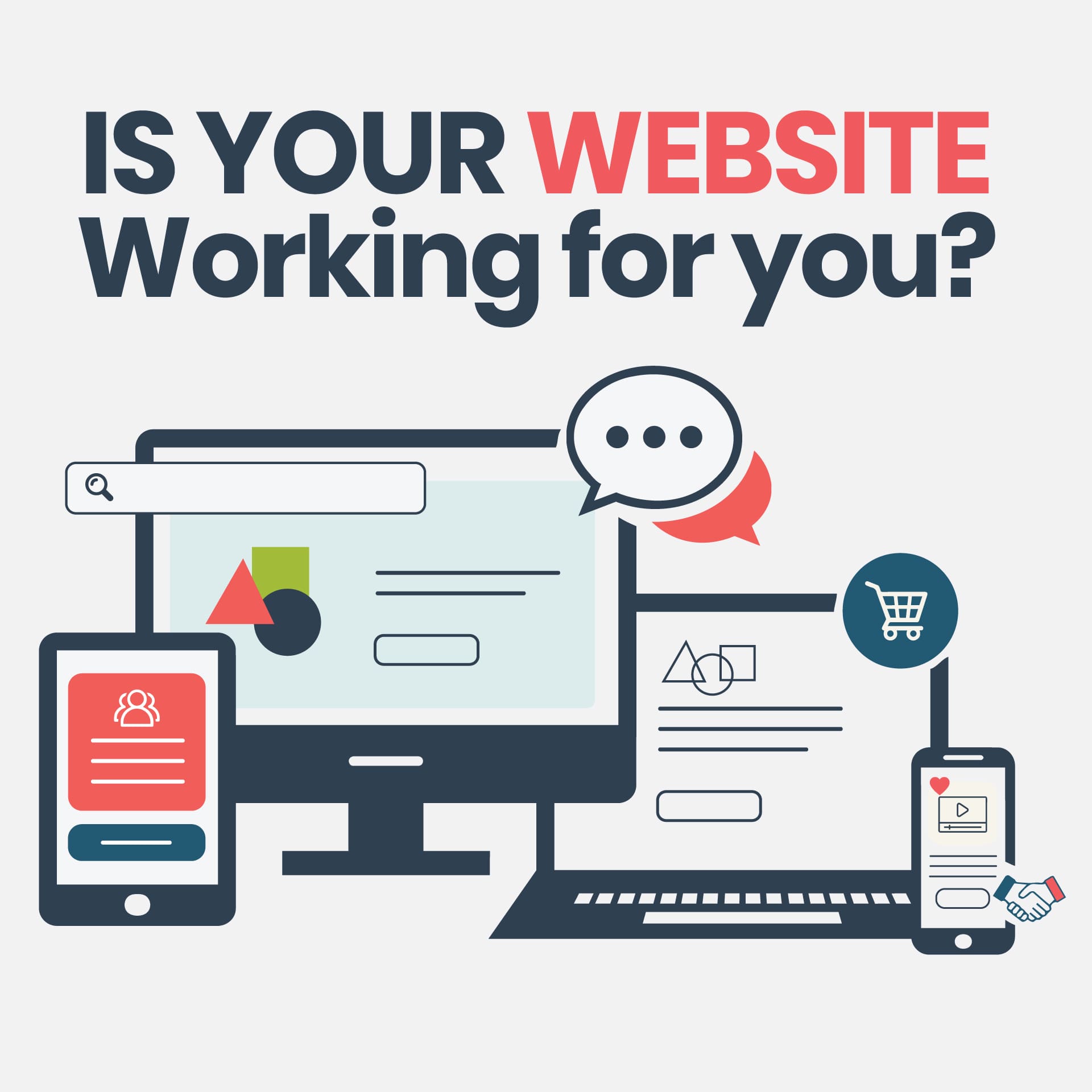
Your Website Has a Job to Do
Many businesses approach their website as something they simply need to have.
You need a homepage.
You need an About page.
You need a list of services.
You need a Contact page.
And, of course, it needs to look good.
All of those things matter. But they don’t answer the bigger question:
What is your website supposed to accomplish for your business?
A successful business website should do more than tell people who you are. It should actively contribute to your business.
It should help people find you.
It should answer their questions.
It should build confidence.
It should make it easy to take the next step.
And it should continue doing those things long after your office has closed for the day.
Your website shouldn’t simply exist.
It should work.
Think of Your Website as Your 24/7 Employee
Imagine hiring a new employee and giving them this job description:
“Sit at the front desk. Look professional. Tell people about our company if they happen to stop by.”
You probably wouldn’t consider that a very effective employee.
Yet that’s essentially what many businesses ask their websites to do.
A website should have a much bigger job description.
Your website should help people find you.
Before someone can become a customer, they have to discover your business.
Your website can help you appear when potential customers search for the products, services, problems, and solutions you provide.
This is where search engine optimization, local SEO, helpful content, and a solid website structure become important.
Your website isn’t doing its job if the people looking for what you offer can’t find you.
First, get noticed.
Your Website Should Answer Questions
When someone lands on your website, they’re probably looking for answers.
They may be asking:
Do you provide what I need?
Can you solve my problem?
How much does it cost?
Where are you located?
How does your process work?
Have you helped people like me before?
How do I get started?
Your website should anticipate those questions and make the answers easy to find.
The better your website communicates, the less work you make your potential customers do.
And that’s important.
People don’t want to work hard to figure out whether your business can help them.
Your website should make it easy.
Your Website Should Build Trust
Finding your business is only the beginning.
People need a reason to trust you.
Think about your own behavior when you’re considering a business you’ve never used before.
You probably look at the website.
You read reviews.
You look at photos.
You check out the company’s experience.
You compare options.
You look for evidence that the business knows what it’s doing.
Your website is part of that decision.
Professional design, clear messaging, testimonials, reviews, case studies, credentials, helpful content, and a consistent brand all contribute to the impression your business makes.
Your website may be the first meaningful interaction someone has with your company.
Make that interaction count.
Your Website Should Help Generate Leads
A visitor isn’t necessarily a customer.
Your website needs to help move people from interest to action.
That might mean:
- Calling your business
- Requesting a quote
- Scheduling an appointment
- Filling out a contact form
- Making a purchase
- Signing up for information
- Downloading a resource
- Starting a conversation
A good business website doesn’t make visitors wonder what to do next.
It guides them.
Clear calls to action, intuitive navigation, useful information, and a thoughtful user experience can remove the friction between “I’m interested” and “Let’s talk.”
Your website doesn’t have to pressure people into becoming customers.
It should simply make the next step obvious.
Your Website Should Support Your Sales Process
Your website can also do work before your sales team ever talks to someone.
Think about all the questions a potential customer might have before reaching out.
Your website can answer many of them ahead of time.
It can explain your services.
It can demonstrate your expertise.
It can show examples of your work.
It can address common concerns.
It can explain what makes your business different.
It can introduce your team.
It can demonstrate results.
By the time someone calls or fills out a form, they may already understand who you are and why you’re worth talking to.
Your website shouldn’t replace your sales team.
It should help your sales team.
Your Website Should Keep Working After the Sale
Here’s where the employee analogy gets even more interesting.
The relationship doesn’t end when someone becomes a customer.
Your website can continue providing value through:
- Helpful resources
- FAQs
- Customer support information
- Product or service information
- Educational content
- Updates
- Instructions
- Guides
- Ongoing communication
A great website isn’t only focused on acquiring the next customer.
It can help you serve the customers you already have.
And those customers may eventually become repeat customers, reviewers, referrers, and advocates for your business.
The website isn’t just part of the sale. It’s part of the relationship.
What Is Your Website’s Job Description?
If your website were an employee, what would its job description say?
Maybe it would look something like this:
Position:
Digital Growth Employee
Hours:
24/7/365
Responsibilities:
Get Found
Help the right people discover your business.
Create Interest
Give visitors a reason to keep exploring.
Build Trust
Show people why they should choose you.
Answer Questions
Provide useful information before they ever contact you.
Create Action
Make it easy to call, schedule, request, buy, or contact.
Support Customers
Continue providing value after the conversion.
Create Opportunities
Turn happy customers into repeat business and referrals.
That’s a much more ambitious job description than:
“Have a website.”
Is Your Website Doing Its Job?
This is where it’s worth taking an honest look at your current business website.
Ask yourself:
Does it help people find us?
Does it clearly explain what we do?
Does it communicate who we serve?
Does it answer the questions our customers are asking?
Does it build trust?
Does it make the next step obvious?
Does it generate leads?
Does it work well on mobile devices?
Is the information current?
Are we measuring what it’s actually accomplishing?
If you’re answering “no” or “I’m not sure” to several of these questions, your website may not be living up to its potential.
And that doesn’t necessarily mean you need to start over.
Sometimes your website needs a redesign.
Sometimes it needs better content.
Sometimes it needs SEO.
Sometimes it needs better calls to action or a better user experience.
Sometimes it simply needs ongoing attention and optimization.
The first step is figuring out what isn’t working and why.
Your Website Should Work for Your Business
At Steck Insights, we don’t believe a website should simply be something your business has.
It should be something your business uses.
Your website should help you get noticed, communicate your value, build trust, generate opportunities, and support your customers.
That’s why we think about websites differently.
Your website is one of your hardest-working employees.
So give it a job worth doing.
And then make sure it’s doing it well.
Is Your Website Doing Its Job?
If you’re not sure how your website is performing—or where there may be opportunities to improve—Steck Insights offers a Website Impact Audit designed to identify what’s working, what’s holding your website back, and what you can do next.
Your website works 24/7.
It should be working for your business.
Steck Insights — Websites that work for your business.